
In the first week of June, South Korea will determine its next president. Election Day in Korea is set for June 3rd.
This election follows a significant political upheaval: on December 3, 2024, former South Korean President Yoon Suk-yeol declared martial law, which was then lifted just three hours later. This incident led to his impeachment, and now, new presidential candidates are intensifying their campaigns to secure the nation’s highest office.
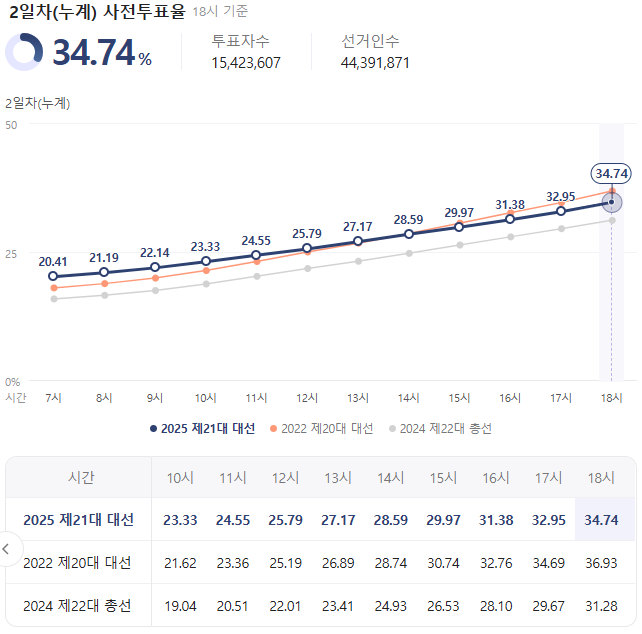
From May 29th to 30th, South Korea held its early voting period for the 21st presidential election in 2025. The combined first and second-day early voter turnout recorded 34.84%. This means over a third, or 15.42 million, of the 44.39 million eligible voters participated in early voting. This figure falls short by 2% compared to the 36.93% turnout recorded in the 20th presidential election in 2022. It’s worth noting that the 20th election’s early voting period included a weekend, which likely contributed to its higher turnout.
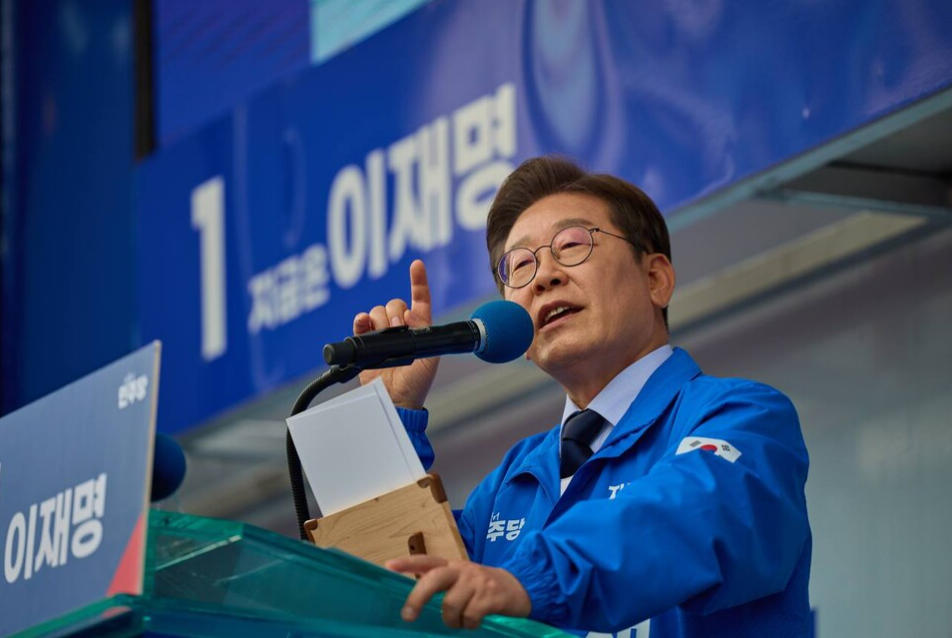
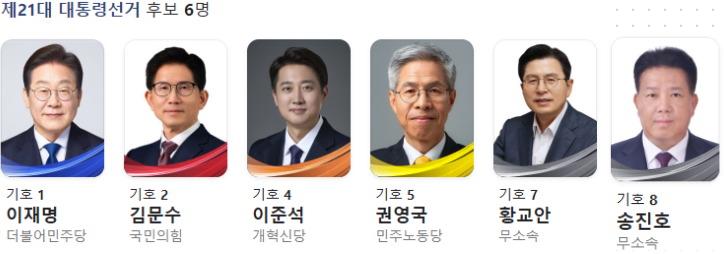
A total of six presidential candidates are vying for the position, and in just three days, one of them will be elected as president. While not yet confirmed, Lee Jae-myung, candidate number 1 from the Democratic Party of Korea (liberal), is considered the most likely to win. He recently showed the highest approval ratings in public opinion polls. Lee Jae-myung previously ran in the 2022 presidential election, securing 47.83% of the votes. Within the Democratic Party, he also commands high support, having led the party as its chairman for several years.
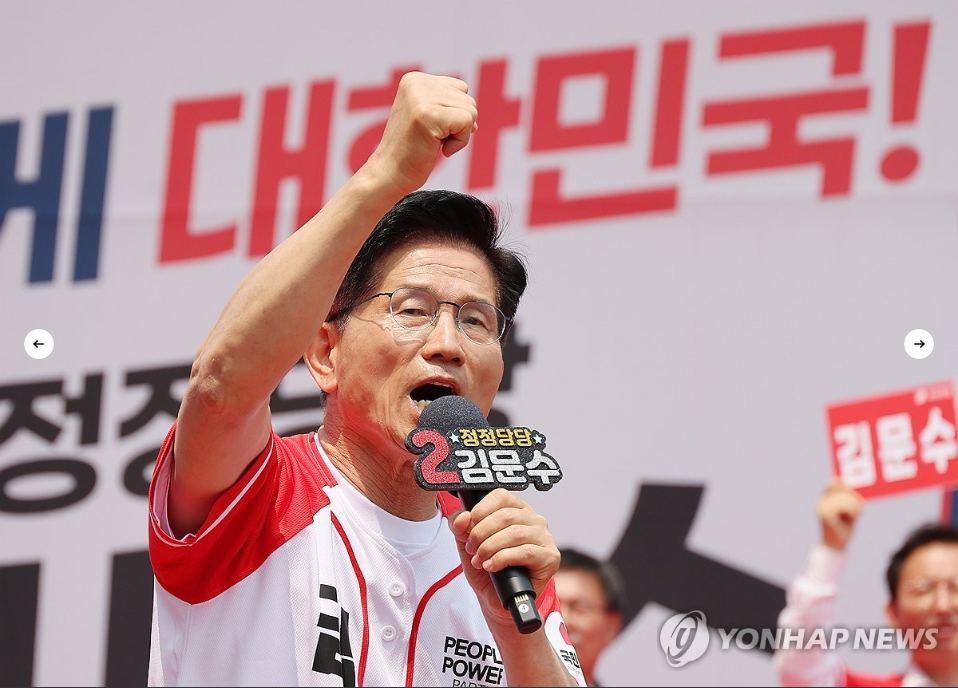
Conversely, the conservative People Power Party (PPP) experienced significant internal turmoil before finalizing its candidate, struggling to unite its forces. Over a two-month period, eight individuals competed for the nomination, with Kim Moon-soo ultimately winning the primary. However, the remaining seven candidates did not consolidate their support behind Kim Moon-soo, resulting in a fragmentation of the party’s voter base. Furthermore, public sentiment against the PPP is currently very high, given the widespread public resentment following former President Yoon Suk-yeol’s martial law declaration.
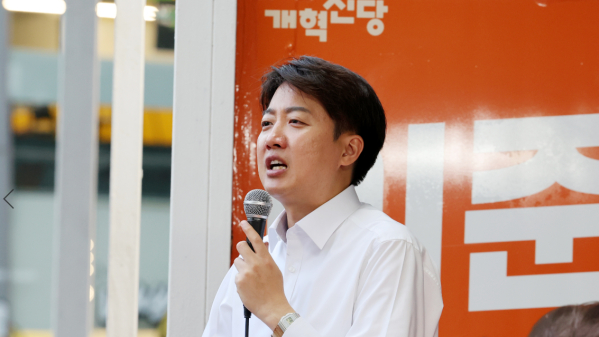
Lee Jun-seok, candidate number 4 from the New Reform Party, once served as the chairman of the People Power Party before being ousted. He subsequently founded a new conservative party, the New Reform Party. In the 22nd general election in 2024, his party garnered over 3% support, securing two proportional representation seats and winning a district election in Hwaseong City, bringing the party’s total to three elected officials. Now, he is running for president as the party leader.
At 40 years old, Lee Jun-seok is considered young among South Korean politicians and enjoys significant support, primarily from men in their twenties and thirties. Some citizens, disillusioned with both the Democratic Party (liberal) and the People Power Party (conservative) and fatigued by their constant conflicts, are considering Lee Jun-seok of the New Reform Party as an alternative. He is widely regarded as intelligent, having graduated from Harvard University with an A.B. in Computer Science and Economics, and he demonstrated impressive debate skills in the three televised debates. Personally, I believe Lee Jun-seok’s chances of becoming president in this election are not high, but many are closely watching to see how much support he will ultimately receive.
#Korea #SouthKorea #President #Election #Political #Landscape